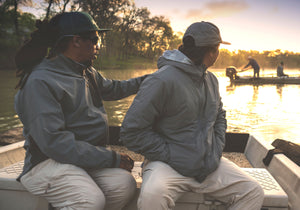

Fly fishing offers a world of variety — from quietly wading and casting by the shore to drifting across still water in a boat. Whether you prefer to stand on the bank or sit comfortably afloat, each approach presents its own set of challenges, opportunities and tactics. In this guide, we’ll explore how fly fishing from a boat differs from bank fishing, and how to adapt your technique accordingly.
Why Choose Bank Fishing?
Bank fishing remains a favourite among many fly anglers — even those who own boats. There are a number of reasons why fishing from the bank can actually be advantageous.
Precision, stealth and presentation
When fishing from the bank, your success often comes down less to the pattern of fly and more to how you present it. As one advice column on bank fishing notes: when you spot a “bank-sipper” (a trout feeding in shallow water near the bank), you have to get low, creep close, and perform a straight upstream cast so that the fly drifts naturally toward the fish.
This kind of fishing combines the subtlety of hunting with the patience of fishing — stalking a fish, watching its silhouette under the surface, choosing a cast, and waiting for the perfect take. It makes each catch feel like a personal victory.
Access & simplicity
Bank fishing doesn’t require boats, trailers or extra gear. You can often pull up, hop out, and fish a promising stretch of water even if you only have an hour or two — ideal for short trips or after work. From the bank, you can explore little-known pockets, wade shallow shallows, and target fish in accessible water that boats can’t reach.
It’s also easier to test flies, adjust your retrieve or practice casting technique when you’re stationary and not concerned with boat handling. As one angler put it: bank fishing lets you “focus on your casts and lures — and nothing else.”
Ideal on tricky water
When water is high, flooded or full of cover — like submerged trees, vegetation, or steep, overgrown banks — a boat may struggle to navigate. In those situations, fishing from the bank can actually offer better access, allowing you to reach shallow water or cover zones where fish shelter in rising water.
Why Choose Boat Fishing?
That said, casting from a boat offers many benefits — especially when you want to explore more water, go deeper, or fish in places inaccessible from shore.
Cover more water — reach deeper zones
From a boat, you can move easily to the middle of a lake, across deep pools or along hidden edges. This mobility allows you to target fish that might be holding deep or far from the bank — unreachable by shore casts.
On stillwaters or large lakes, boat fishing often opens up far more water to fish than you’d ever cover from the bank. For wider rivers or large reservoirs, boats (or float tubes) let you explore vast stretches with relative ease. Float tubes in particular are popular among fly anglers for trout or pike fishing in water that’s inaccessible by wading or casting from shore.
Flexibility & variety
With a boat, you’re not tied to one casting location. You can drift, reposition, cast into deeper water, or even troll streamer flies behind a moving boat — a technique known in some circles as trolling tandem streamer fly fishing.
Boat fishing also allows for different casting techniques and tactics that are less feasible from shore — for example, swinging a streamer or executing multiple casts in deeper water without worrying about weeds or overhanging banks.
Great for targeting different species and conditions
In large lakes or deeper rivers, fish like pike, char, or deeper-dwelling trout may inhabit zones beyond the reach of shore casts. Boat access increases your chances of reaching those fish. In UK waters, lakes that permit both bank and boat fishing can give anglers the freedom to switch tactics depending on conditions.
How Fly Fishing Techniques Differ Between Bank and Boat
Switching from bank to boat (or vice versa) isn’t just about changing location — it means adopting a different mindset and adjusting your casting, presentation, and even equipment.
Here are some of the main differences:
Casting direction and strategy
-
Bank fishing usually involves casting upstream or across seams, eddies, or near-bank structure. The goal is often subtle — get the fly to drift naturally, with minimal drag, in areas where fish are already holding near cover. This often calls for careful casts, possibly upstream reach-casts or mends to keep the fly moving naturally.
-
Boat fishing, on the other hand, gives you freedom to cast in multiple directions — across the lake, downstream, or even back toward the bank. You might cast farther, deeper, or use different techniques like streamer fishing or trolling.
Presentation and retrieve
-
From the bank, presentation is often all — a perfect drift, a subtle twitch, or a still, lifelike presentation often wins the day. In shallow or clear water, fish are easily spooked — so stealth, quiet movement, and subtle presentation are crucial.
-
From a boat, you can afford to be more dynamic. You may swing a streamer, retrieve it with more movement, or cover water faster. Especially in deeper water, heavier flies or streamers may work better, and a more assertive retrieve can trigger strikes.
Area coverage and adaptability
-
Bank anglers often concentrate on one promising spot — a seam, a pocket behind a rock, undercut banks, or shallow edges. You tend to fish that area thoroughly before moving on.
-
Boat anglers can continually reposition — covering deeper flats, drop-offs, submerged structure, or access different banks. It’s about breadth and adaptability: searching for active fish rather than concentrating on one small zone.
Gear and tackle considerations
-
Bank fishing often benefits from lighter, versatile gear. For many UK anglers — especially beginners — a midweight rod (5–7 weight), a standard fly line, leader and tippet, and a selection of dry or light wet flies are perfect. This is precisely the approach recommended by the guiding-style advice for new anglers.
-
Boat fishing, especially in deeper water or for larger species, may call for heavier rods, sinking or sink-tip lines, larger flies such as streamers, and perhaps different techniques entirely (e.g., streamer fishing, trolling, or deeper drift).
Which Method Suits Which Situation?
It’s not a question of “better” or “worse” — bank vs boat fishing is all about context, water, species, and what you want out of your day. Here are some scenarios where one approach might suit better than the other:
-
Shallow water, low flow, or clear currents: Bank fishing often wins. In those conditions, fish are likely to be holding near banks, undercut banks or seams — classic bank-sipper territory.
-
Short sessions, convenience, or limited time: Bank fishing is ideal. No need to rig a boat, launch, paddle or motor — just grab your rod, waders and walk in.
-
Large lakes, deep water, or elusive species: Boat fishing offers clear advantages. Access deeper zones where trout, char, pike or other species may lurk beyond shore reach.
-
Need for variety or exploration: Boat fishing offers mobility, but bank fishing offers focus. If you want to test different water types in one day, a boat lets you roam. If you prefer to zero in on a promising seam or pocket, bank fishing lets you concentrate your efforts.
-
Learning to cast or practise technique: For beginners or those refining their casting and presentation, bank fishing provides a controlled setting. You’re not dealing with a drifting boat, wind on the water, or complex line control — just you, your line, and a target zone.
Bringing It All Together: A Balanced Approach
For many fly anglers, the ideal is not choosing one method over another — but embracing both. Each has its place, and switching between bank and boat fishing can add variety, challenge, and reward.
The beauty of fly fishing lies in its versatility. On one day, you might meander along a riverbank, creeping low and casting upstream with delicate dry flies, trying to tempt a wary trout from under a root or rock. On another, you might drift across a lake in a small boat or float tube, casting streamers or deeper flies into drop-offs, submerged structure or deep flats, hoping for a chase or a surprise strike.
By appreciating the strengths and limitations of each method, you’ll become a more adaptable angler — and ultimately increase your chances of finding fish.
How to Transition from Bank to Boat Fly Fishing (or Vice Versa)
If you’re used to bank fishing and want to try boat fishing — or if you normally fish from a boat and want to hone your bank skills — here are some tips to make the transition smoother:
-
Adjust your casting style — When moving to the bank, slow down, focus on stealth and presentation. Use upstream casts, reach casts or mends to get a clean drift. When on a boat, don’t be afraid to cast farther, use sinking lines or streamers, or cover more water with broader casts.
-
Change your fly patterns — Bank fishing often rewards lighter flies (dry flies, small wet flies, nymphs) and subtle presentation. Boat fishing may call for larger streamers, heavier flies, or patterns that draw attention in deeper or darker water.
-
Read the water differently — On the bank, focus on shallow seams, undercut banks, rocks, overhangs, and near-shore structure. From a boat, look for drop-offs, submerged structure, deeper flats, contours or submerged cover.
-
Adapt your gear if needed — For bank fishing, a lighter rod, standard fly line, and stealthy flies may suffice. On a boat (or deeper water), consider heavier rods, sinking or sink-tip lines, larger flies, or even different tackle to handle stronger fish or deeper water.
-
Remain flexible and observant — Water conditions change, fish move — and what works on the bank one day may work from the boat another. Be ready to adapt. A balanced fly angler doesn’t just fish what they know — they fish what works.
Why This Matters for Anglers
For anglers in the UK — whether casting on a chalk stream, lake, loch or river — having both bank and boat fishing in your toolbox makes you ready for nearly any situation. A day of trout fishing might begin wading the near bank of a river, shift to a boat or float tube on a lake, or involve exploring deeper water for char or pike.
UK waters often permit both bank and boat fishing on the same water body. For example, some lakes where boat fishing is allowed may also have public or permitted bank stretches — giving anglers the freedom to pick their method depending on conditions, time of day, target species, or simply their mood.
Moreover, whether you’re new to fly fishing or a seasoned angler, starting from the bank — with versatile gear and a focus on presentation — remains a solid foundation. As highlighted in the beginner’s guide to fly fishing tackle, a midweight rod (5–7 weight), standard fly line, simple leader/tippet, and a small but effective selection of flies is more than sufficient to get you started.
Final Thoughts: It’s Not a Competition — It’s About Versatility
Bank fishing and boat fishing aren’t opponents — they are complementary styles in the same angling toolbox. Each offers its own rewards: the quiet satisfaction of stalking a trout along a riverbank; the thrill of scanning a deep lake from a boat and casting a streamer into unknown depths.
For the true fly angler, mastering both styles means never being limited by water, season or conditions. It means having the confidence to cast from the bank when water is low or tricky — and the freedom to launch a boat or float tube when the weather and conditions call for it.
At Orvis, we believe that the essence of fly fishing lies not in where you cast — but how you cast. Whether you’re bank-side or boat-bound, your success depends on your reading of water, your presentation, and your ability to adapt. So the next time you plan your fishing trip, don’t ask “which is better.” Ask “which is best today.”
Tight lines.